Every Opportunity. Every Customer. Every Time.
You spent the ad money to get them on the lot. The Bell System puts every walk-in on the board the second they arrive, gets the right manager there while the customer is still standing in front of your rep, and gives you something real to coach from tomorrow morning.
Put in your store’s real figures. The math runs in your browser — nothing is sent to us, and nothing is saved.
You are selling 50 units a month on 250 ups.
That is your closing ratio moving from 20.0% to 21.2%.
Gross you are not writing today. Bring the number to your consult and put our price next to it.
Pick a time that works for you — your consultation is confirmed instantly.
Trouble with the scheduler? Open it in a new tab
Written for a showroom floor, not adapted from sales software built for somebody else’s industry.
A rep sees his customers. A desk manager sees his bells. A principal sees every store.
We train your people on your floor. If the salespeople don’t pick it up, nothing else on this page matters.
Not a ticket queue. You get people who know how a store runs.
From the second a customer steps on the lot to the second the deal closes, every request, every response and every counter offer is timestamped — and visible to the people who need it.
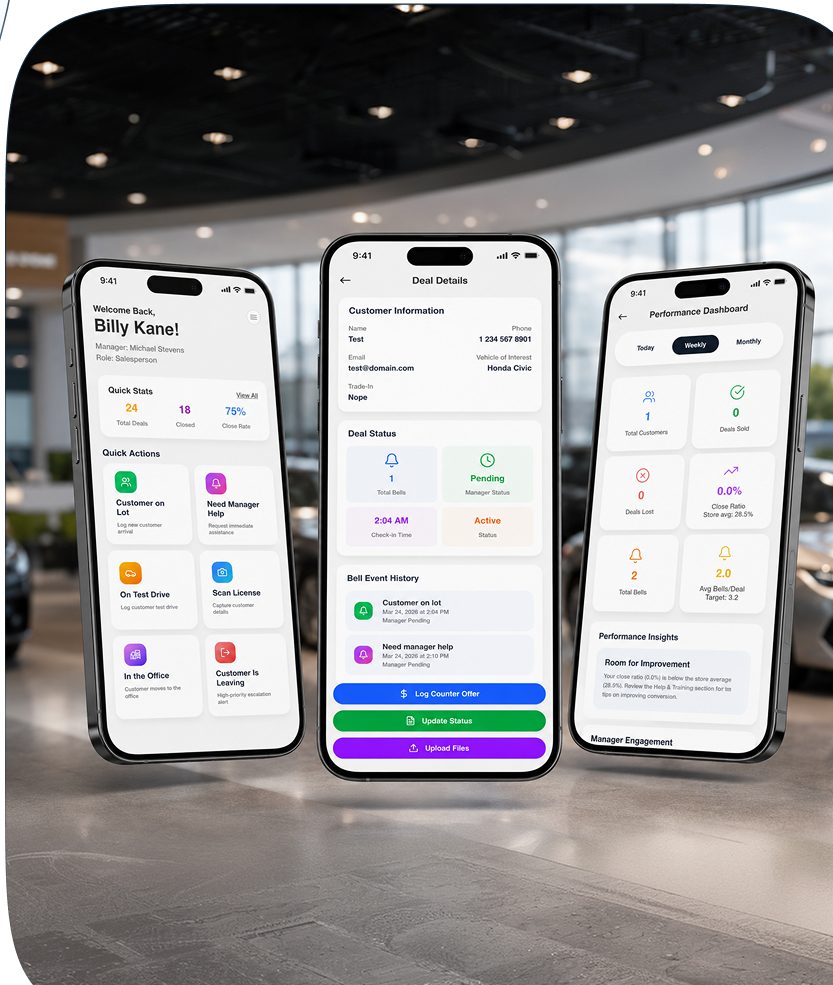
Customer on the lot. Need a manager. Out on a test drive. Heading for the door. One tap, and the right phone lights up.
The response clock starts when the bell rings, and only the rep can stop it — by confirming a manager actually got there. Nobody stops their own clock from the desk.
The customer’s number goes straight to a manager to approve, modify or reject — worksheet attached — while they are still sitting in front of your rep.
Every deal moves through the same seven steps, and every step is timestamped. You stop guessing where a rep is losing people — you can see the exact step, and coach that one thing.
Every open bell, who owns it, and how long it has been ringing. One screen, the whole floor.
Every bell, response and counter offer writes to a timeline that cannot be rewritten later. When a deal goes sideways, you can reconstruct it.
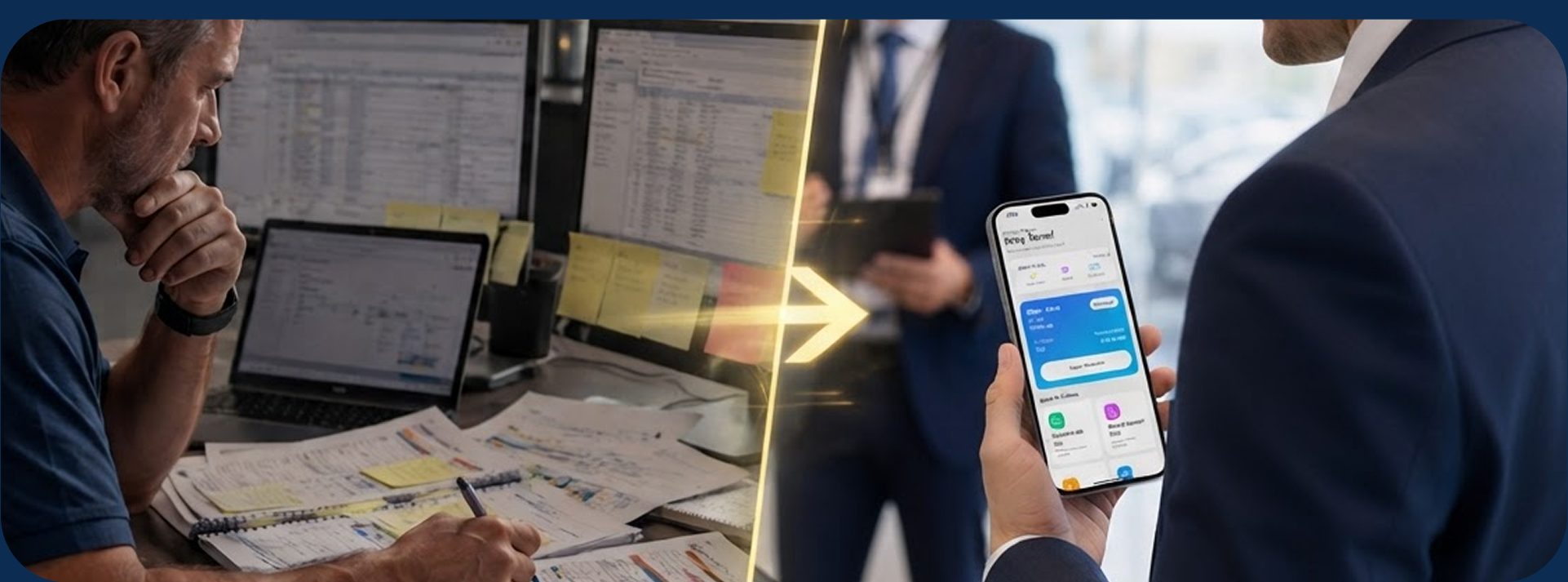
A customer is on your lot right now. Whether they buy usually comes down to three things: how fast a manager reaches them, what happens when they push back on the number, and whether anyone notices when they start walking toward the door.
The rep is hunting the floor for a turn-over while the customer sits and waits.
One tap rings the bell. The right manager is alerted with the deal already on screen.
The customer’s number waits on someone’s desk while their desire to buy cools off.
Counter offers route straight to a manager to approve, modify or reject — worksheet attached.
Managers must chase down updates to understand dealership activity.
A live floor board shows every open bell, who owns it, and how long it has been ringing.
When a deal goes sideways, nobody can reconstruct who did what, or when.
Every bell, response and price change writes to an append-only deal timeline.
A salesperson, a desk manager and a principal need three completely different things. Nobody has to wade through anyone else’s screen to get theirs.
One tap brings a manager, instead of leaving a customer sitting while the rep hunts the floor. The seven steps live on the phone in their hand, out on the lot — which is finally something a coach can point at.
You know the instant a customer is on the lot — not after the test drive, not when the paperwork lands on your desk. Take the bell, build the worksheet and answer a counter offer from wherever you happen to be standing.
One process, run the same way on every floor, with the numbers to hold it there. Response times, where deals stall and how your rooftops compare stop being opinions and become the standard you manage to.
The Bell System started in Moore, Oklahoma, building one thing for dealerships instead of everything for everyone. What ships next comes from what dealers tell us is breaking on their floor.
Meet the Team →A feature earns its place by fixing something that is actually costing a store deals.
It runs on a phone, in a hand, out on a lot. It has to work every time or reps stop tapping.
You get people who know how a store runs, not a ticket queue.